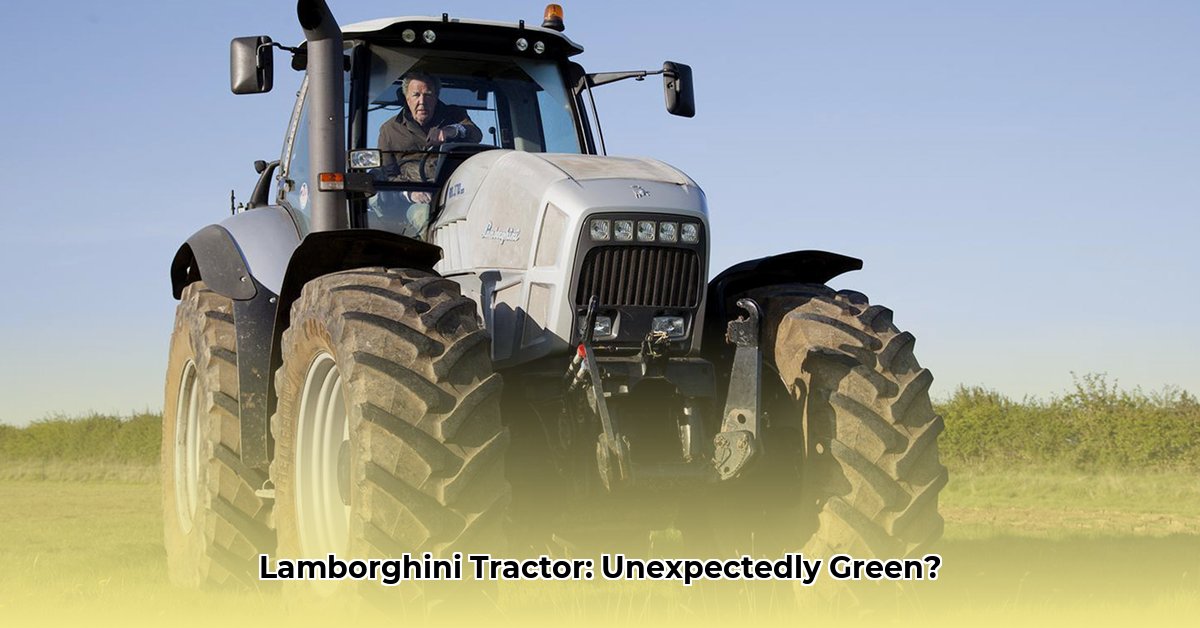
The Lamborghini R8.270 tractor boasts impressive power and advanced features, promising increased efficiency for large-scale farming operations. But how does its performance stack up against sustainability goals? This review analyzes the R8.270's capabilities, comparing it to competitors and examining its environmental impact to determine whether it's a viable option for environmentally conscious farmers. For comparison, see other small tractor options here.
Power and Performance: A Closer Look
The R8.270 packs a powerful 271-horsepower engine and a sophisticated 40-speed transmission, enabling smooth operation and potentially reduced fuel consumption compared to older models. Its four-wheel drive enhances maneuverability and minimizes soil compaction. However, critical data on fuel efficiency (e.g., gallons per acre) is currently unavailable, hindering a complete assessment of its operational sustainability. This lack of transparency necessitates further investigation into its actual fuel consumption under varying conditions. Does the R8.270's advanced technology translate to real-world fuel savings, or does its power come at a significant environmental cost?
Sustainability: The Crucial Question
The R8.270's environmental footprint remains largely unquantified. While the manufacturer emphasizes broader sustainability goals, concrete data on fuel efficiency, greenhouse gas emissions, and end-of-life management is conspicuously absent. This lack of transparency makes it difficult to confidently assess its overall sustainability. Until comprehensive life cycle assessment (LCA) data is publicly available, evaluating the R8.270's true environmental impact remains challenging. Is Lamborghini prioritizing power over planet-friendly practices?
Comparative Analysis: Benchmarking the R8.270
A comprehensive comparison with competing tractors is crucial for a balanced assessment. Key performance indicators (KPIs) such as fuel efficiency (gallons/acre or liters/hectare), greenhouse gas emissions (CO2e/ton of harvested crop), and total lifetime costs (including maintenance and disposal) should be analyzed. This comparative analysis will reveal whether the R8.270's technological advantages outweigh its potential environmental drawbacks. How does the R8.270's environmental performance compare to John Deere or Case IH models with similar power outputs?
R8.270: Weighing the Pros and Cons
| Pros | Cons |
|---|---|
| High power output, leading to potential efficiency gains | Lack of detailed sustainability data; critical information is missing |
| Advanced features for improved maneuverability and potentially reduced fuel consumption | Potential for high fuel consumption and significant emissions |
| Reduced labor requirements | Uncertain lifecycle costs (purchase, maintenance, disposal) and environmental impact |
Actionable Insights: Steps Towards Sustainable Practice
Several stakeholders can contribute to a more sustainable approach to utilizing the R8.270:
1. Farmers: Implement precision farming techniques (GPS guidance, variable-rate application) to optimize resource use and minimize environmental impact. Track fuel consumption meticulously and explore alternative, sustainable fuels.
2. Tractor Dealers: Promote fuel-efficient operating practices during sales and provide comprehensive training to operators. Advocate for increased transparency regarding sustainability metrics from manufacturers.
3. Policy Makers: Establish standardized sustainability metrics for agricultural machinery and implement policies that incentivize the adoption of low-emission technologies. Support research into sustainable fuels and farming practices.
4. Researchers: Conduct comprehensive LCAs of the R8.270 and competitive models. Focus on developing technologies that reduce agricultural machinery's environmental footprint.
Conclusion: Power and Sustainability – Finding the Balance
The Lamborghini R8.270 offers substantial power and potential for increased farm efficiency. However, the absence of comprehensive sustainability data significantly limits its assessment. Further research and transparent reporting are crucial for determining whether this powerful machine can truly contribute to a sustainable future for agriculture. The onus is on Lamborghini, researchers, and policymakers to provide the necessary information and incentives to ensure responsible use of high-powered agricultural machinery. Ultimately, a holistic approach combining technological advancement with environmental stewardship is vital.